There are two versions of every project. The one you run — with its scrappy internal notes, half-formed tasks and the reminder to yourself to actually invoice the deposit. And the one the client should see — calm, clear, and only the parts that concern them.
Most tools force you to pick. Share the whole messy board, or keep clients in the dark and field "just checking in!" emails forever. I didn't want to pick, so Chord lets every task decide for itself.
Private or portal, task by task
Every task has a visibility toggle. Private means it's yours alone — the client never knows it exists. Portal means it appears on their timeline. So your internal admin, your rough drafts and your "chase the printer" reminders stay backstage, while the milestones and the things you need from them show up front and centre. Same project, two clean views.
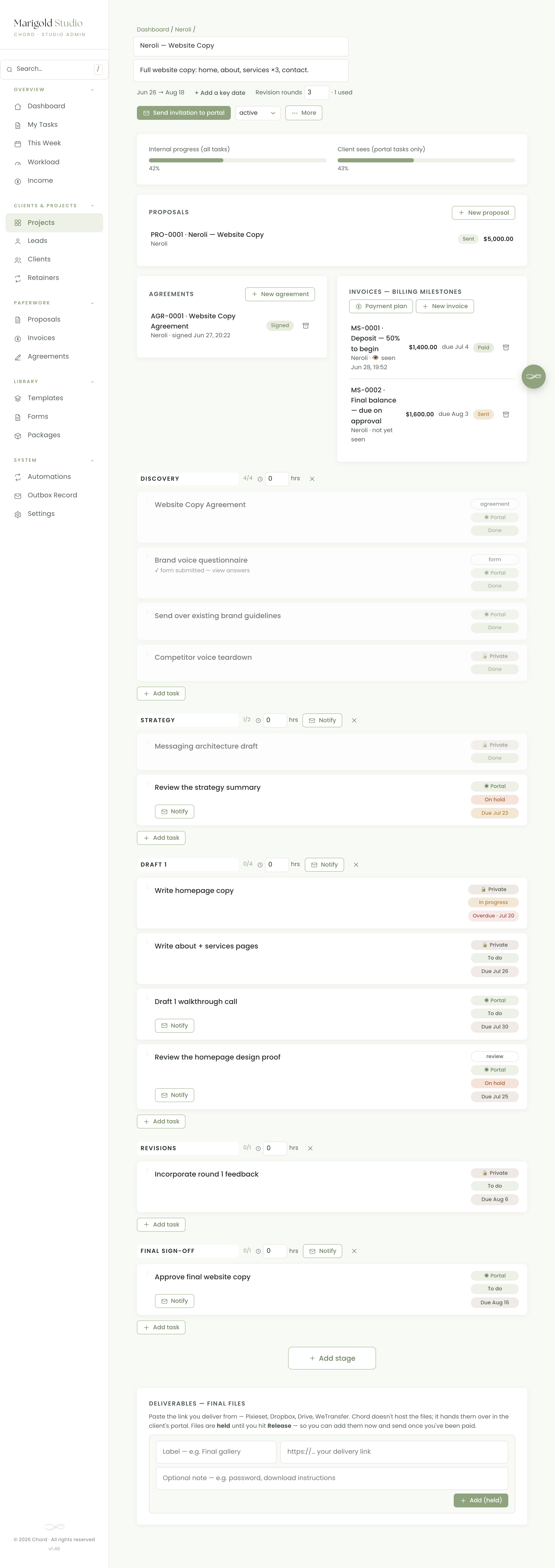
Show what's coming — without unlocking it yet
Here's my favourite bit. A portal task can be set to upcoming: the client sees it on their timeline as a locked preview, so they know what's next and roughly when — but it isn't live for them to act on yet. It's the difference between a client who's anxious because the future is a blank, and a client who's relaxed because they can see the road ahead. You get to reassure them without prematurely handing over a step you're not ready for.
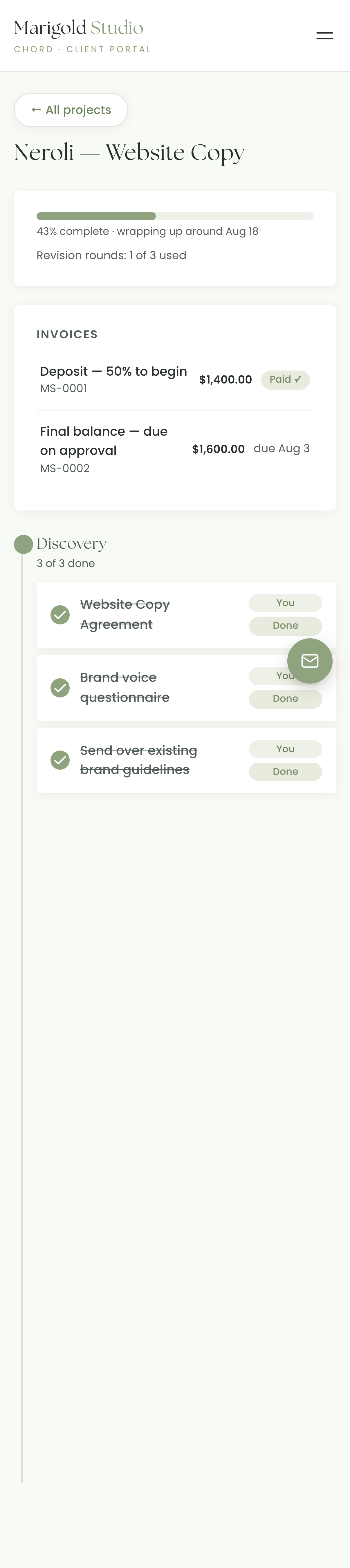
Fewer status emails, calmer everyone
When clients can see exactly where things stand, the "any update?" messages mostly stop. Not because you've trained them, but because the answer is already in front of them, under your branding, whenever they want it. That's quieter for them and quieter for you — which is really the whole idea.
A portal that respects the backstage
A good client portal isn't about showing clients everything. It's about showing them the right things, beautifully, and keeping the rest to yourself. That line — between transparency and boundaries — is one a CRM for creatives should draw for you, per task, without a second thought. In Chord, it's just a toggle.