If you run a creative studio, do a quick audit of your monthly software bill. Really add it up. Most creatives are surprised — not because any single tool is expensive, but because there are so many of them.
The typical creative "stack" looks something like this:
- Paperwork tool — Dubsado (from US$20/mo), Bonsai or 17hats (US$60/mo) — to send proposals, contracts and invoices.
- Project management tool — Asana (from ~US$11/user), Notion (from US$10/mo) or LaunchBay — to track tasks and timelines.
- Proofing tool — Pastel (from US$29/mo) or Markup.io (US$79/mo) — so clients can leave feedback on designs and copy without a chaotic email thread.
Add it up and you're comfortably at US$60 to US$150+ a month — before email tools, scheduling links, cloud storage and everything else. That's US$700–1,800+ a year to duct-tape a workflow together.
But money is the smaller cost
The dollars sting, but the real tax is friction. When your tools don't share context, you become the integration:
- You re-type the same client's name and details into four different apps.
- Your proposal doesn't know about your project, so nothing carries over.
- Feedback lives in one tool, tasks in another, the invoice in a third — and only your memory connects them.
- Your client gets four different logins and four different brand experiences, which quietly undercuts the premium studio you're trying to be.
Every hand-off between tools is a place where a ball can drop. Most creatives have a low-grade anxiety humming all day because of exactly this.
The case for one branded place
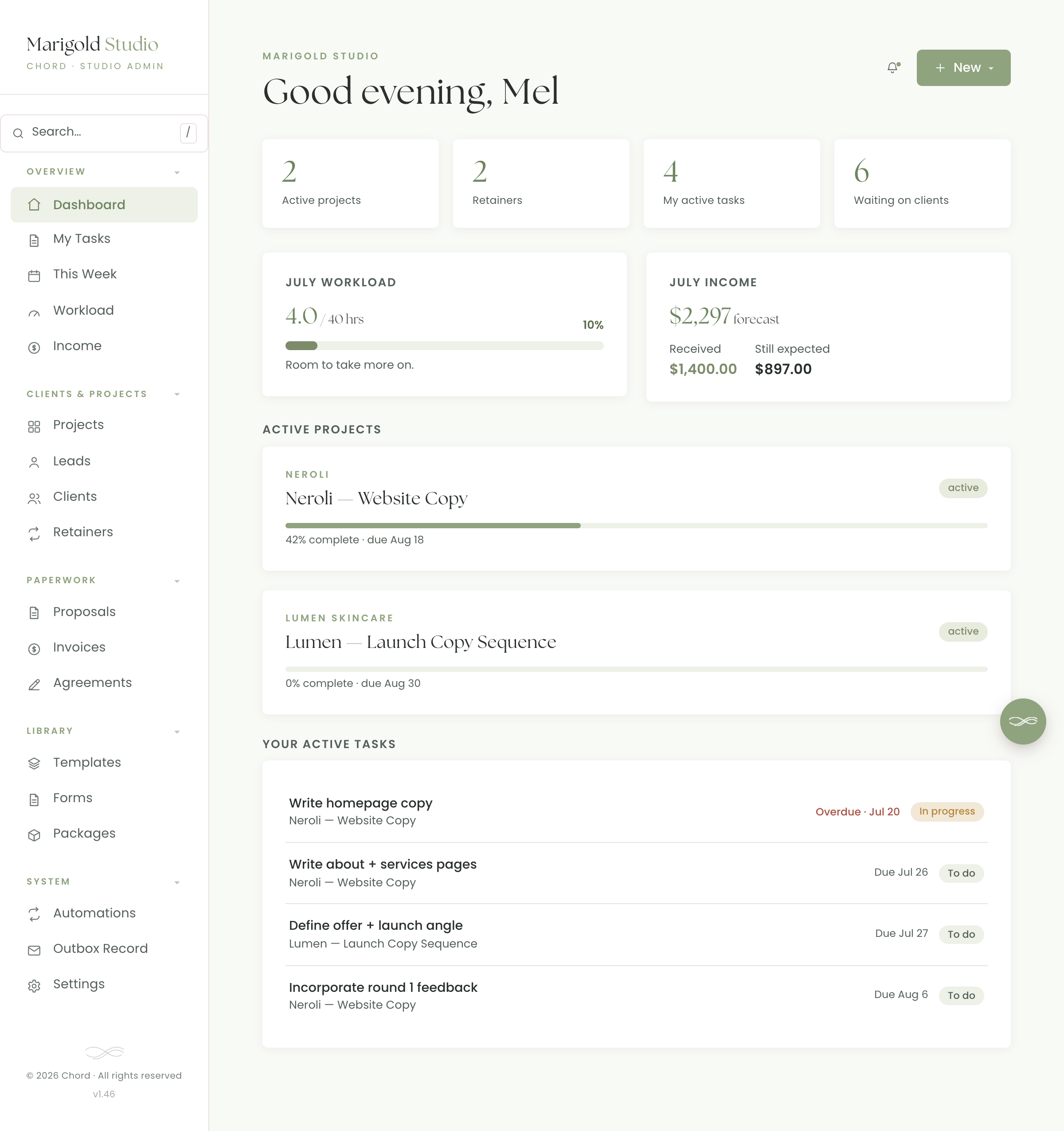
This is the reason we built Chord. Instead of stitching three or four subscriptions together, you get the paperwork, the project management and the proofing in a single, on-brand home — for S$9–29 a month, less than most single tools in the list above.
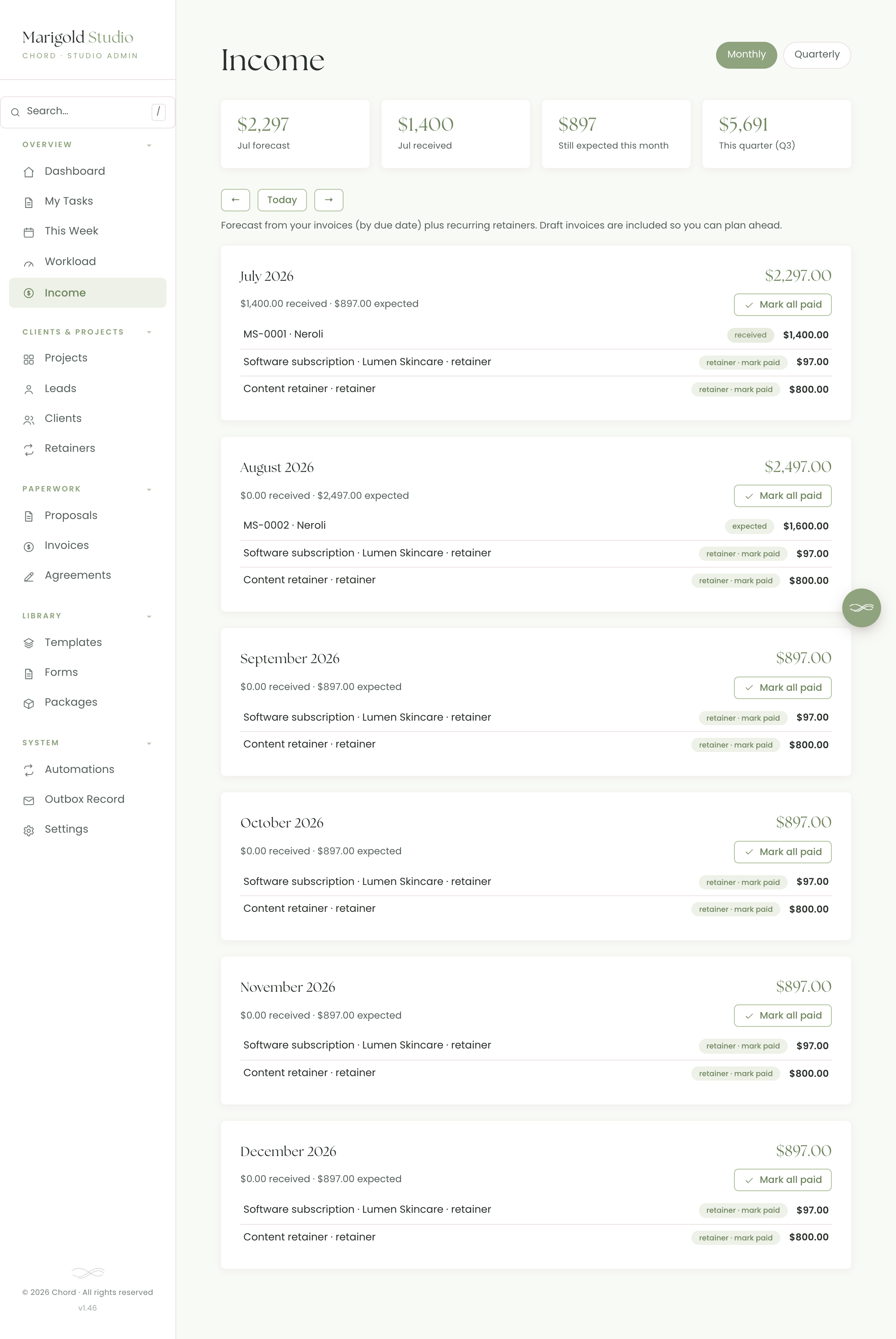
Because it's one system, the parts actually talk to each other. A proposal becomes a project. A project carries its own tasks, files, approvals and invoices. Your client opens one branded portal and sees everything in one place. And you get two things no cobbled-together stack can give you: a live view of your workload capacity and a forecast of your income.
What to do next
You don't have to switch anything today. But the next time a subscription renews, ask whether it's really pulling its weight — or whether it's just one more note playing out of tune. If you'd rather have all of it in harmony, that's exactly what we're building.