Feast or famine isn't really a money problem. It's a visibility problem. The money is often on its way — you just can't see it, so your nervous system assumes the worst.
I used to keep a spreadsheet for this. A brittle, colour-coded thing I'd update at 11pm, feel good about for all of five minutes, then stop trusting by the weekend. The whole point of a CRM for creatives, I decided, is that the numbers should come from the work you're already doing — not a second job of data entry.
The invoice already knows
Every invoice in Chord has a status: draft, sent, seen, paid. That status is all the forecast needs. A sent invoice is expected income. A paid one is received. Add your retainers on top, and Chord quietly rolls it all into a forward view — this month, and the quarter ahead — without you lifting a finger.
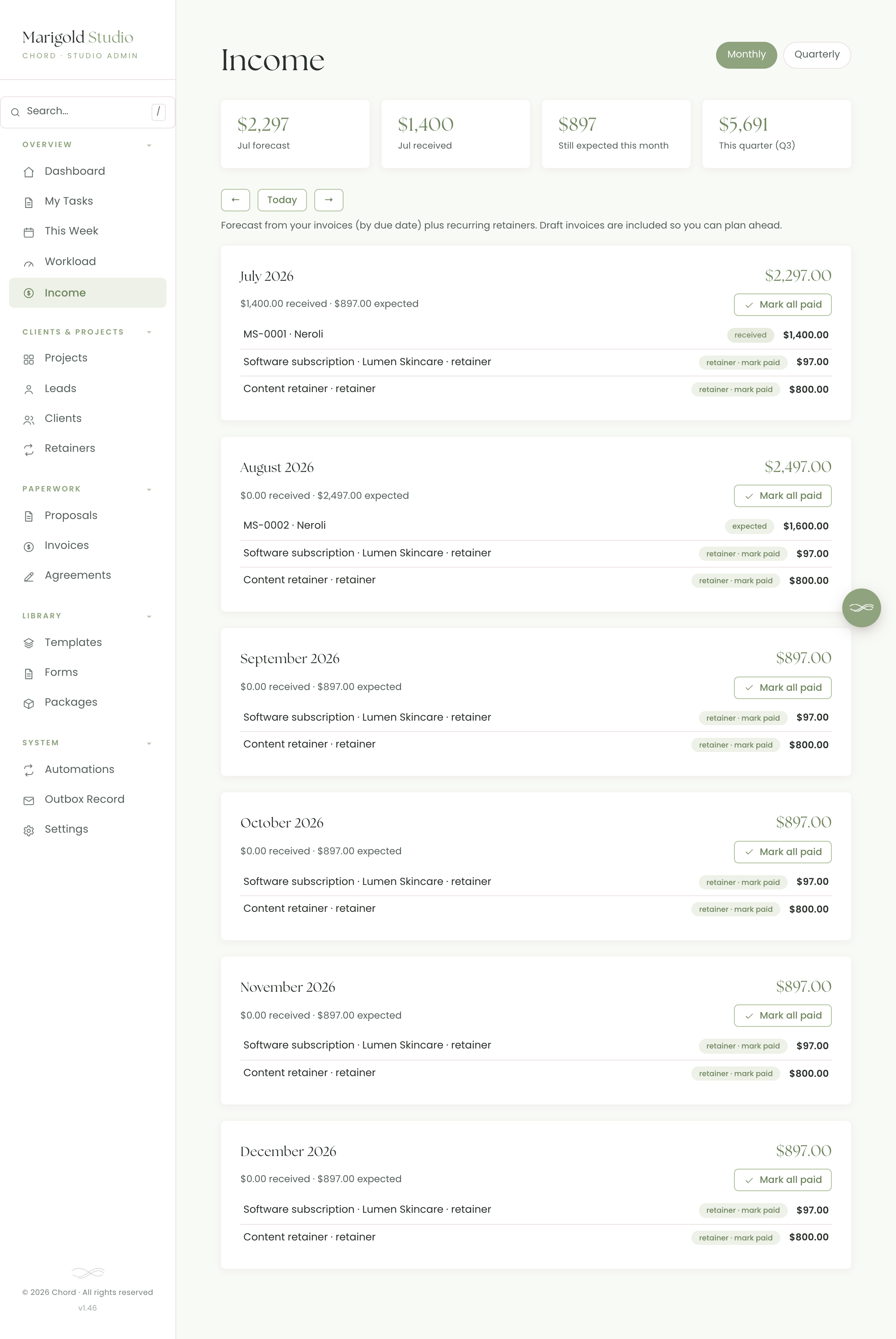
Because it's tied to invoices you were going to send anyway, it's always current. You don't maintain the forecast. The forecast maintains itself.
"Received" and "still expected", side by side
Those two numbers are the ones that matter. Received is what's safely in. Still expected is what's promised but not yet paid. Seeing them separately is oddly calming — it turns a vague money-dread into two figures you can actually reason about. Can I pay my bills by the end of this month? Should I chase that one sitting invoice? You no longer have to guess based on gut feeling.
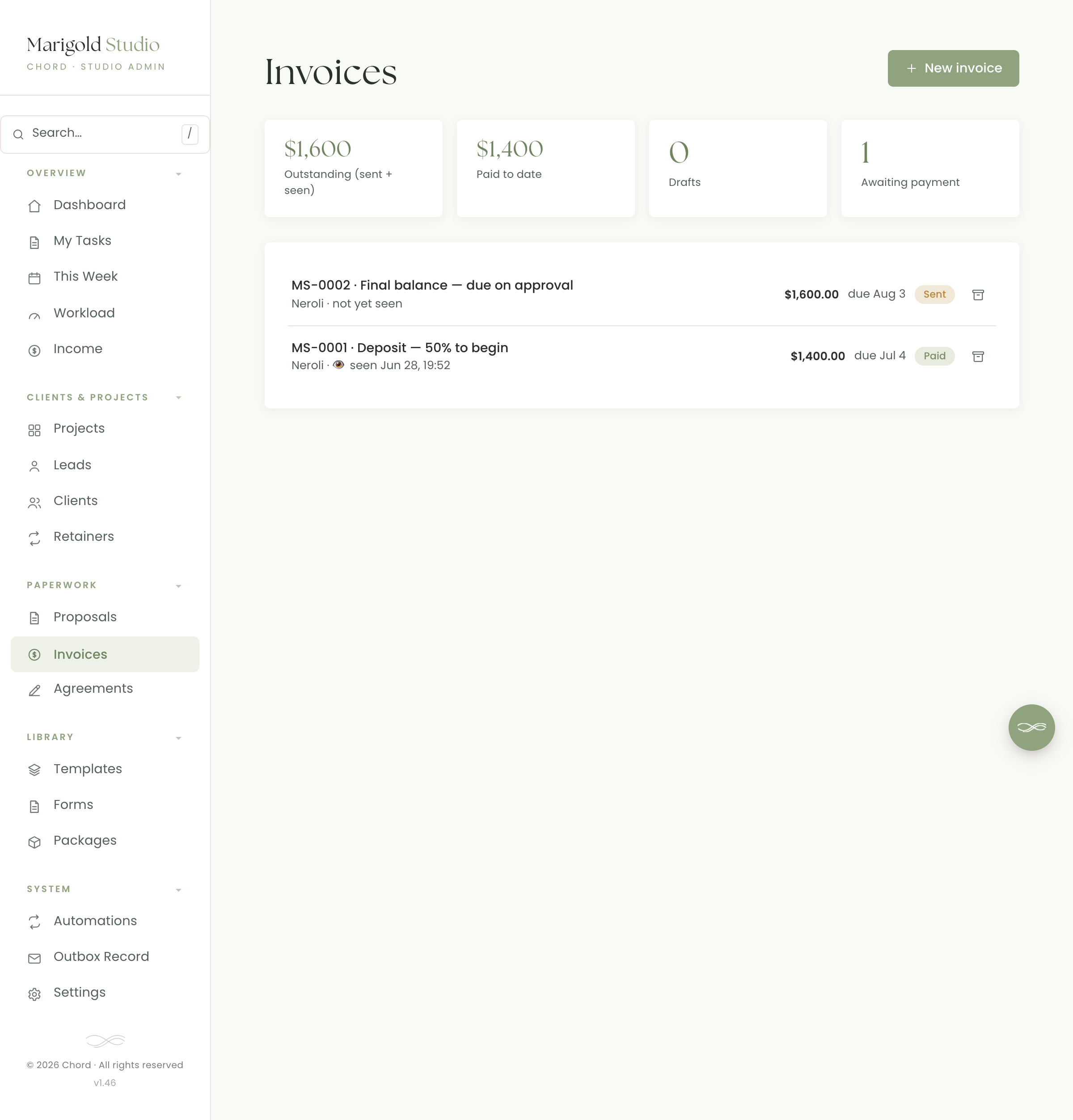
Plan around a number, not a mood
When your income is a forward view instead of a monthly surprise, everything downstream gets calmer. You take the slow month less personally, because you can see the busy one coming. You price the next project with a bit more nerve, because you know exactly where the gaps are. And on the Pro plan, Reports turn all of it into your real effective hourly rate — what your time actually earned, which is a number every creative should know and almost none do.
Money stress rarely disappears entirely. But a lot of it is just not being able to see the shape of what's coming. Chord draws the shape.