The yes that hurts you most is rarely to a bad client. It's to a good one, at a bad time — a project you'd love, landing in a month you're already drowning in. You say yes because you don't want to lose them, and then you spend six weeks quietly falling apart.
Learning to say no — or "not yet" — is one of the most protective skills a solo creative can build. Here's how to do it in a way that keeps the relationship warm.
Know the answer before you feel guilty
Guilt fills the gap where certainty should be. If you're not sure whether you have room, "yes" always wins, because saying no to a maybe feels reckless. So take the maybe out of it. Before you reply, check your actual capacity — how full is the month they're asking about?
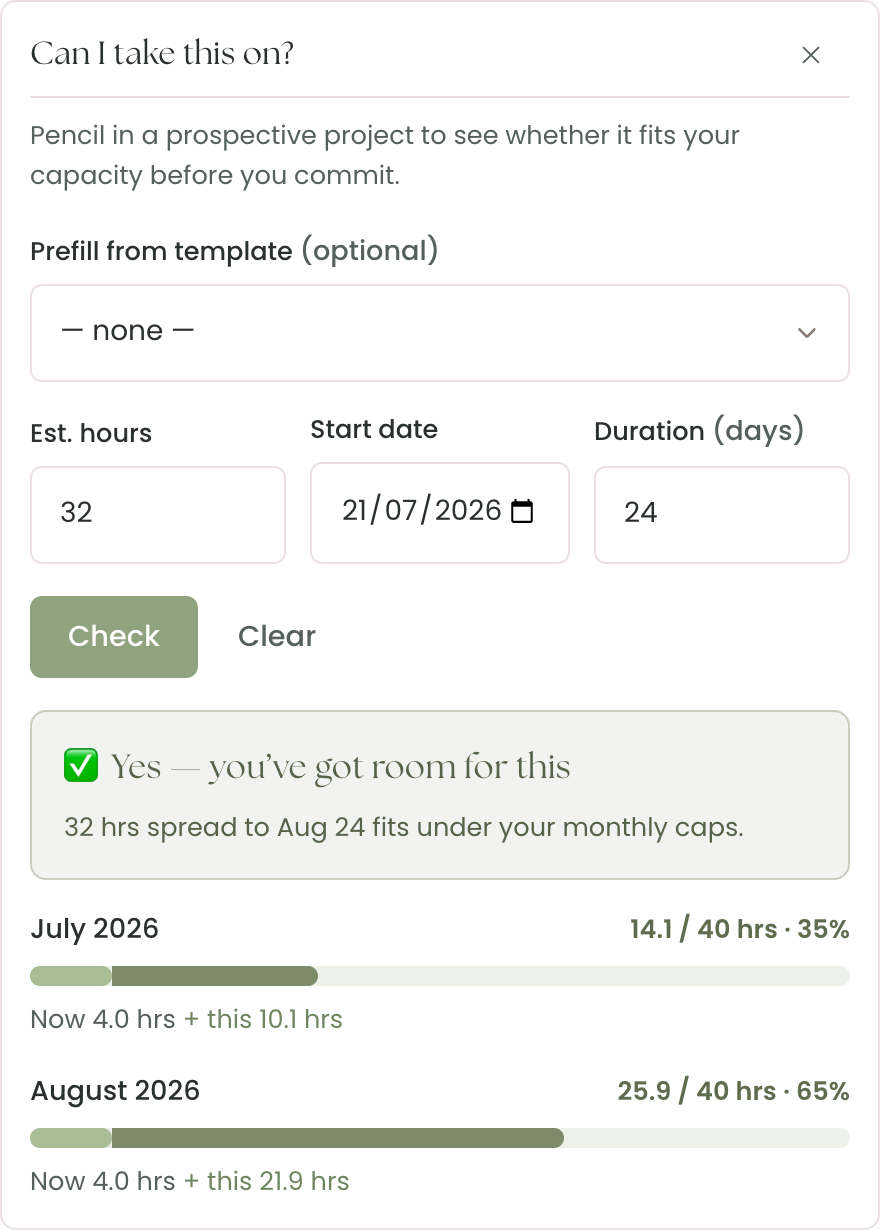
When you can see that August is already at 110%, the no stops being a personal failing and becomes simple logistics. That reframe is everything — it's much easier to hold a boundary you can point at than one you have to justify.
Offer a door, not a wall
"No" and "no, and go away" are different sentences. Most of the time you're not rejecting the client — you're declining the timing. So say that: "I'd genuinely love to work on this. I'm fully committed through August, but I could start it properly on the 4th of September and give it the attention it deserves." You've protected your capacity and handed them a way to still work with you.
Be specific, and don't over-apologise
Vagueness feels like a brush-off; a paragraph of apology hands the client guilt to manage. A clear, warm, one-line reason works better than either. "I keep my project load capped so I can do my best work" is a boundary that actually makes you more attractive to work with, not less. People trust a professional who knows their limits.
Protect the season, not just the day
Saying no isn't only about this one project. It's about not letting three good yeses collide in the same three weeks. When you can see your months laid out — what's committed, what's coming — you make each decision against the whole picture, not just the excitement of the moment. That's how you keep a full calendar from becoming a burnt-out one.
The relationship survives the no. The burnout doesn't.
Here's the quiet truth: clients rarely remember the project you gracefully delayed. They very much remember the one you delivered late and frazzled because you couldn't say no. A good boundary, kindly held, protects the work, the client's experience, and the version of you that gets to keep doing this for years. Saying no is client care — just the long-term kind.