"CRM" is a strange phrase to put next to "creative." It conjures sales teams and pipelines and software that assumes you already have employees. Most creatives don't want a CRM. They want to stop feeling scattered — to look professional, get paid on time, and not carry the whole client relationship in their head.
I built one, so I'm hardly unbiased. But having lived on the wrong end of a five-tool workflow for years, here's the honest list of what I'd look for if I were choosing today — whether or not the answer is Chord.
1. It should hold the whole relationship, not one slice of it
A lot of tools do one thing well: proposals, or invoices, or task management. The tax is on you — you become the integration, ferrying details between apps. The best CRM for creatives holds the arc from first enquiry to final payment in one place, so nothing is re-entered and nothing is lost between steps.
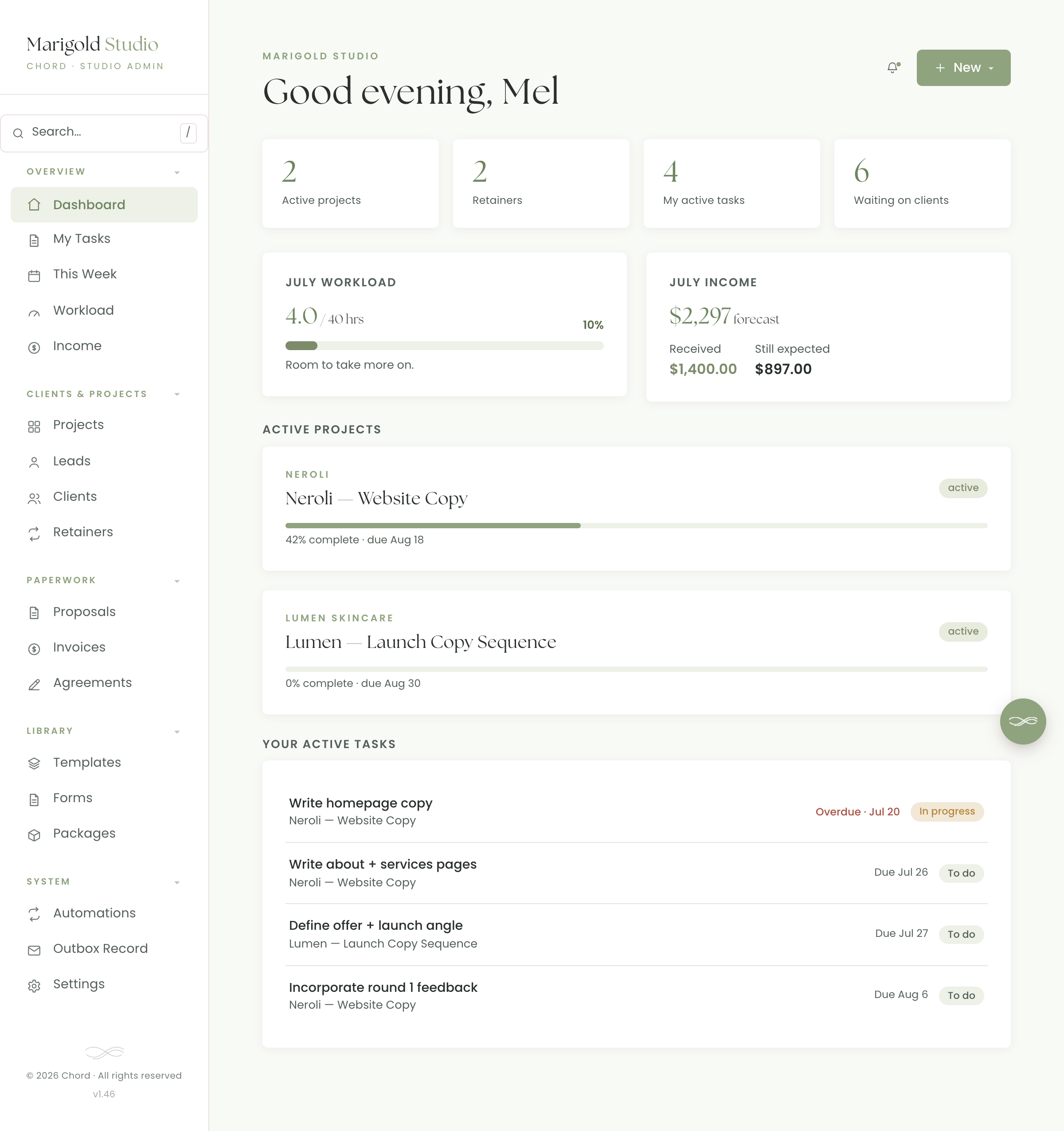
2. Your clients should see your brand, not the tool's
This one is underrated. When a client logs into a portal that's yours — your logo, your colours, your name on the emails — a studio of one looks established and trustworthy. If the software's brand is louder than yours, keep looking.
3. It shouldn't take a cut of your money
Some tools quietly clip a percentage of every invoice you send. Over a year that's real money, for the privilege of being paid. A fair CRM lets you get paid your way — card, bank transfer, a QR — and keeps its hands off your revenue.
4. It should help you plan, not just record
Recording what happened is table stakes. What actually changes your year is foresight: a view of how full next month is before you say yes, and a forward line of income built from your real invoices. A CRM that only looks backwards leaves the hardest decisions — what to take on, what to charge — to your gut alone.
5. It should feel calm to open
You'll be in this thing every day. If it's busy, loud, and bristling with features you'll never use, it becomes one more source of low-grade stress. For a business of one, that matters more than a feature checklist. The right tool should quiet your mind, not add to the noise.
6. It should fit your season, and your budget
Your workload isn't flat, so your tool cost shouldn't be either. Look for pricing that scales down in the quiet months and up when you're busy — and a real free trial, so you can feel it before you commit. Enterprise pricing for a solo creative is a red flag.
So, which one?
There are good tools out there, and the honest answer is that the best one is the one you'll actually keep open. Chord is our attempt at all six of the above in one calm place — proposals, contracts, invoices, a branded portal, and the capacity and income foresight most tools skip — priced from S$9 a month, with no cut of your invoices. If that's the shape of what you're looking for, we'd love to have you in the beta.